by Mark Arthur
Global finance is changing. We’re currently seeing the biggest structural transformation in a generation. Traditional banking is struggling to meet the demands of a digital-first global economy. Cross-border payments are slow and expensive. Inflation is creating huge problems in several countries right now. Some rates are soaring over 200%. At the same time, digital commerce, global freelancing, and decentralized finance (DeFi) are growing. For many, financial inclusion feels unattainable.
Stablecoins are an important addition to modern finance. They’re less volatile than common cryptocurrencies like Bitcoin or Ethereum. Stablecoins maintain a consistent value rather than fluctuating with the market.
What About Asset-Backed Tokens?
There’s a big growing trend for digital currencies anchored in real assets. Asset-backed tokens (ABTs) are stablecoins supported by assets like gold, silver, real estate, or commodities. They’re becoming a dominant category. Digital Ounce is a next-generation ABT backed by physical precious metals.
In This Guide:
- Stablecoin overview
- Benefits
- Different types of stablecoins
- Asset-backed tokens
- MiCA in regulating digital assets in the EU
- The future of finance through platforms like Digital Ounce
Understanding Stablecoins
Stablecoins are digital currencies that maintain a steady value because they’re linked to real assets. They’re a bridge between traditional finance and blockchain infrastructure. You can use stablecoins like any other digital currency. People typically use them for payments, savings, or DeFi platforms.
Top 5 Stablecoin Benefits
1. Price Stability
Stablecoins are designed to hold a steady value. You can send, receive, or hold them without worrying that the price will swing wildly overnight.
2. Fast, Low-Cost Transactions
Payments settle within seconds at a fraction of the cost traditional financial institutions charge.
3. Global Accessibility
You don’t need a bank account to hold stablecoins. Anyone with a smartphone and internet access can use them.
4. Digital Finance Reliability
People use stablecoins for lending, borrowing, payments, and liquidity because they reduce risk.
5. Programmability
Stablecoins can be used as collateral in contracts. Payments, settlements, and financial agreements can all happen without anyone having to do anything.

Different Types of Stablecoins
There are multiple types of stablecoins, including fiat-backed, crypto-backed, algorithmic, and hybrid models. Here’s a look at all of the major kinds of stablecoins you might come across.
1. Fiat-Collateralized Stablecoins (EMoney Tokens under MiCAR)
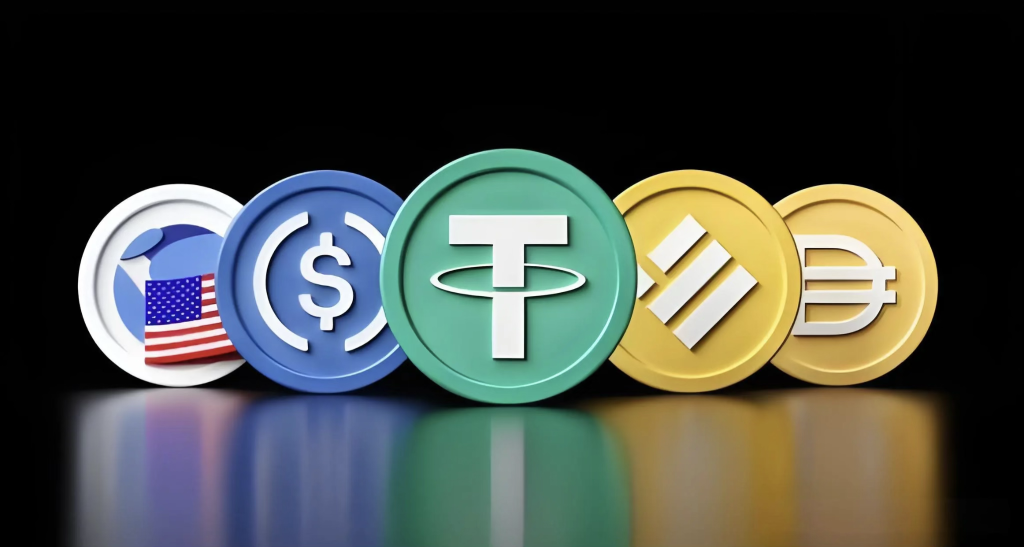
These stablecoins are backed by cash held in bank accounts. USDC (USD Coin) and USDT (Tether) are the two largest stablecoins. These cryptocurrencies maintain a stable value, pegged 1:1 to the US dollar.
Pros:
- More reliable
- Transparent audits
- Widely used
Cons:
- Reliance on banks and custodians
- Centralized structure
- Vulnerable to regulatory or banking disruptions
Best For: Payments, trading, corporate settlement, and DeFi participation.
2. Crypto-Collateralized Stablecoins (Asset-referenced Token) (ART under MiCAR)
Cryptocurrencies are behind these tokens. Cryptocurrency-backed tokens are very strong, but they are not as stable as tokens backed by real assets or real money.
Pros:
- Fully decentralized
- Transparent collateral via blockchain
- Resistant to censorship
Cons:
- Over-collateralization
- Market crashes can threaten stability
- Complex for newcomers
Best For: DeFi users who prefer a decentralized approach.
3. Algorithmic Stablecoins
The price stays “stable” because the system adjusts supply automatically, not because there’s something real behind it. They’re interesting, but not recommended for long-term use by individuals or institutions.
Pros:
- No reliance on custodians
- Easily scalable
- Fully digital and decentralized
Cons:
- Historically unstable
- Vulnerable during market panic
- High-profile collapses
Best For: Developers, traders, and advanced DeFi users.
4. Asset-Backed Tokens (ABTs), known as Asset-referenced Token (ART) under MiCAR
ABTs or asset-referenced Tokens (ARTs) are the most reliable option. ABTs are stablecoins backed by physical assets, including precious metals, real estate, art, luxury goods, commodities, intellectual property, and royalties.
Pros:
- Tangible value
- Strong inflation resistance
- Fully auditable
- High trust and transparency
- Ideal for savings, wealth protection, and cross-border transactions
Cons:
- Stricter regulatory oversight
- Dependence on custodians
Best For: Anyone who wants digital money that holds steady value backed by something real.
What You Need to Know About Asset-Backed Tokens
Asset-backed tokens are unique because their value comes from something real. Instead of relying on price speculation or algorithmic controls, they’re tied to physical assets that have held value over time.
Different asset types bring different strengths.
- Real estate becomes easier to access when it’s tokenized. Fractional ownership allows more people to invest without the high capital or complexity typically associated with property ownership.
- Precious metals like gold and silver have long been used to protect wealth during periods of inflation, recession, and market stress. Tokenization makes them easier to store, transfer, and use without physical storage.
When you move illiquid assets onto blockchain networks, asset-backed tokens make them more accessible.
MiCA Regulation in the EU
The European Union’s Markets in Crypto-Assets Regulation (MiCA) sets rules for how digital assets operate across EU member states.
Under MiCA, asset-backed stablecoins that rely on more than one underlying asset are classified as Asset-Referenced Tokens, or ARTs. This is different from Electronic Money Tokens, which are tied to a single fiat currency. ARTs rely on varied assets and are subject to closer oversight to protect users and maintain market stability.
ARTs Requirements Include:
- Full reserve backing
- Independent audits
- Mandatory whitepapers
- Clear redemption mechanisms
- Custodial oversight
- Transparency reports
- Consumer protection standards
Key Features:
- Every token is linked to a physical asset.
- Users can purchase small amounts of precious metals digitally.
- Transactions are recorded immutably for full traceability.
- Available to users worldwide.
- Digital Ounce facilitates instant, low-cost cross-border transactions.
- Assets are stored in audited, insured vaults to ensure safety.
How Stablecoins Are Changing Finances | Use Cases

1. Cross-Border Money Transfers
People send money to different countries every day. Right now, they usually use banks or money transfer services. These systems are slow and expensive. The money can take days to arrive, and a chunk of it gets lost to fees.
Stablecoins change that. Instead of going through banks and middlemen, people can send stablecoins directly from one digital wallet to another. The transfer happens much faster, often within minutes, and costs much less.
2. Everyday Payments & Digital Commerce
More online businesses are adopting stablecoins because they are paid faster and with fewer issues than traditional payment methods.
When someone pays by credit card or bank transfer, the funds don’t settle immediately. There can be delays, reversals, or chargebacks. With stablecoins, the payment is final once it goes through. Consumers like stablecoins because prices don’t jump around, and payments work the same no matter where you’re buying from.
3. Inflation Protection & Wealth Preservation
Stablecoins are useful for people in countries with high inflation or capital controls. What do stablecoins mean for them? Instead of holding money that keeps losing value, they can hold a stable digital asset.
An asset-backed stablecoin’s value doesn’t depend on local government decisions or currency policies. It’s an option for people who want to preserve the value of their money without the fear of a crippling economy.
4. DeFi Participation & Financial Innovation
Decentralized finance (DeFi) platforms depend on stablecoins to work properly. Tools like lending, borrowing, trading, and liquidity pools need a digital asset that doesn’t change value every minute. Everyday users can now try these tools with less risk.
5. Corporate Treasury Management & Global Business Operations
Companies can use stablecoins to pay employees, settle international invoices, and move money between offices without waiting days for bank transfers.
Because stablecoins don’t rely on constant currency conversions, businesses can reduce fees and better track their cash. Funds are available right away, making it easier to cover expenses or respond quickly. For startups, exporters, and online-first businesses, stablecoins are an easier way to move money globally without the delays and limits of traditional banking.
6. Web3, Gaming, and Metaverse Economies
Online spaces like Web3 platforms, blockchain games, and metaverse environments need a form of money that doesn’t change value all the time. Stablecoins work here because they make these virtual marketplaces easier to use. Players can use them to buy items, trade assets, or join events without worrying about sudden price changes. Developers can also use them to pay rewards and keep in-game economies running smoothly.
How Physical Assets Become Secure Digital Value
Real, physical assets back asset-backed tokens. These are typically precious metals sourced from established suppliers and verified for quality, weight, and authenticity before any digital asset is created. Nothing moves forward until the physical value exists first.
Here’s a breakdown of what happens next:
- Once secured, the assets go into professional vault facilities. These facilities are monitored around the clock, insured against loss, and frequently audited to ensure the assets remain intact and protected. The assets stay in storage for as long as the tokens tied to them exist.
- Independent auditors regularly review reserves to confirm that the number of physical assets in storage matches the number of tokens in circulation. Audit results and reserve information are public.
- Blockchain technology records token transactions. Each transfer, issuance, or redemption is written to a public ledger. Anyone can see how tokens move and how many exist at any point in time.
- Smart contracts handle the mechanics. When new assets are added to storage, new tokens are created according to set rules. When tokens are redeemed, they are removed from circulation. This keeps supply aligned with the reserves and reduces the need for manual intervention.
The Future of Stablecoins
Over the next several years, stablecoins are likely to become a regular part of how money moves. Stablecoins are increasingly looking less like experimental tools and more like everyday payment options. Banks and fintech companies are already testing and rolling out stablecoin-based payment systems.
Another major change is the move to represent real-world assets digitally. Assets such as property, precious metals, artwork, and other assets can now be issued as tokens rather than locked into slow, paper-based systems. Stablecoins often sit at the center of these transactions, acting as the payment layer.
Stablecoins are also changing how international trade works. Payments that used to take days and pass through several banks can now be settled much more quickly. Businesses can pay suppliers, receive funds, and manage cash flow with fewer delays and lower costs.
In decentralized finance, stablecoins are moving toward models that work better with existing rules and institutions. New systems focus on clearer oversight, defined collateral structures, and products that are designed to be safer and easier to evaluate. Asset-backed stablecoins play an important role here by providing a steadier unit of value that reduces risk within these systems.
Takeaway
Stablecoins made it easier to move money online without relying entirely on banks. While there are a lot of different kinds of stablecoins, asset-backed stablecoins are considered the most trustworthy because they’re backed by real assets. They use assets for stability and blockchain for movement.
Where does this leave you? Finance is starting to blend traditional assets with digital systems. Digital Ounce shows how physical assets, clear rules, and blockchain technology can work together to create digital value that people can actually understand and use across borders.

FAQs
1. What makes asset-backed stablecoins different from other types of stablecoins?
Asset-backed stablecoins are different because a real, physical asset backs them. The most common things are precious metals, real estate, and commodities. Other types of stablecoins are backed by cash held in bank accounts or by software systems.
2. How does Digital Ounce make sure the tokens are backed by real-world assets?
Digital Ounce only issues tokens when an equivalent amount of physical precious metal is held in reserve. For every token in circulation, the matching metal is stored in secure, insured vaults. Independent auditors regularly check the reserves.
3. Is Digital Ounce compliant with European regulations like MiCA?
Digital Ounce does comply with the EU’s Markets in Crypto-Assets Regulation (MiCA). Under MiCA, it falls into the Asset-Referenced Token category.
4. Can I use Digital Ounce for cross-border payments or everyday transactions?
Yes, you can do both. Digital Ounce works as a digital currency that’s easy to use across borders. You can send or receive it in seconds, and the cost is minimal compared to traditional transfers.
5. Who will benefit the most from using Digital Ounce and other asset-backed stablecoins?
It makes sense for different users. An everyday user can hold money without watching their purchasing power erode. Freelancers and international workers can send and receive money with low fees and short wait times. Businesses can move funds, pay partners, and manage global balances. For DeFi users, Digital Ounce is a stable collateral asset.