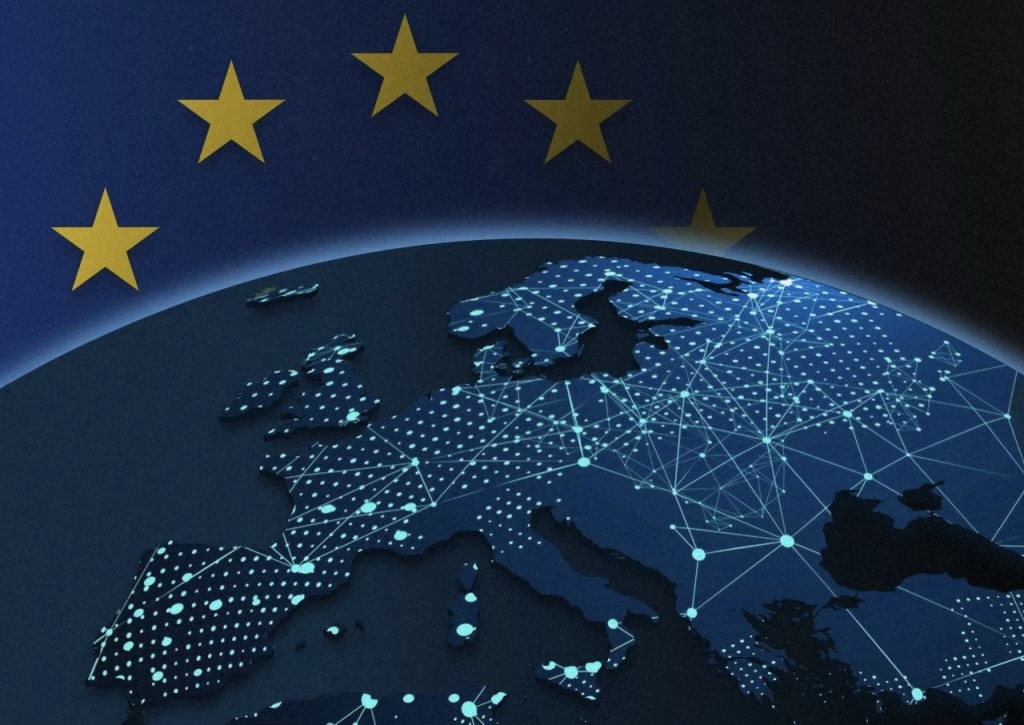
by Mark Arthur

Technology is really powerful. It affects parts of our lives. It changes how we work, talk to each other, travel, learn and even how governments work. This is because every industry today uses systems that are powered by software, cloud infrastructure, artificial intelligence, data networks and online platforms.

As we use digital systems Europe is asking a tough question: how much control does it really have over the technology it uses every day?

This is where the idea of sovereignty comes in. Tech sovereignty is not a term anymore. It’s a talk about Europe’s future, its economic independence, its cybersecurity and even its democratic values. Tech sovereignty means a country or region has control over its own technological infrastructure, data, innovation and digital systems without relying too much on other countries.

For Europe this conversation is important because most of the technology people use daily comes from outside the continent. American tech companies are big in areas like cloud computing, social media, online advertising and operating systems. China is also growing fast in telecommunications, manufacturing and digital infrastructure.

Europe has economies, talented researchers and great universities. It still depends heavily on technology created elsewhere. This dependence raises concerns not about competition but also about privacy, security, economic stability and long-term inter-independence.

The challenge Europe faces today is not about creating startups or building better apps. It’s about deciding whether the continent can stay competitive in a world where technology is becoming more and more important.

Why Tech Sovereignty Has Become Important

Ten years ago technology was seen as a business sector. Today it’s seen as infrastructure. Digital systems are now deeply connected to banking, healthcare, defense, transportation, communication, education and energy networks.

If these systems are controlled by companies or governments from other countries, then they can become vulnerable in ways that go far beyond economics.

Europe has started to realize that depending on technology from other countries can create risks such as losing control over data, depending much on foreign companies, being vulnerable to cyber attacks, having limited say over how ecosystems revolves.

These issues became more visible during global supply chain disruptions, cyber attacks and rising tensions between super powers. Technology is no longer about convenience. It’s now connected to a country’s sovereignty.

Europe’s Dependence on Foreign Tech Companies

One of the concerns in Europe is how much the continent relies on technology from other countries. Most Europeans use services created by companies every day. Google is big in search engines and online advertising. Apple and Google control mobile operating systems. Amazon is leading in cloud computing infrastructure. Meta owns media platforms. Microsoft powers business software and cloud services used by governments and companies across Europe. These companies have become a part of Europe’s economy and daily life.

While these technologies offer innovation and convenience they also create dependence. Europe does not fully control the infrastructure behind many of its digital systems. This raises some questions.

Who controls data? Where is data stored? Which laws apply to it? What happens if tensions between countries increase? How influential do foreign companies have over Europe’s digital future?

These concerns are not just theoretical anymore. Data has become one of the valuable resources in the modern economy. Companies that control data often control markets, advertising systems, consumer behavior and digital ecosystems.

Europe is worried that depending much on external platforms could weaken its long-term economic and political position.

Privacy and Data Protection Concerns

Privacy has always been an issue in Europe. Compared to other regions, Europeans generally care more about personal privacy and digital rights. This is why the European Union introduced GDPR, the General Data Protection Regulation. GDPR became one of the world’s privacy laws and forced companies to be more transparent about collecting data, getting user consent, storing information, tracking practices and sharing data.

The regulation changed how companies around the world handle user data because businesses operating in Europe had to follow standards. For Europe GDPR was more than a regulation. It was a statement that digital rights matter. However regulation alone cannot solve the issue of dependence. With privacy laws, Europe still relies heavily on foreign platforms and infrastructure. This is why the conversation around tech sovereignty keeps growing.

The Economic Side of Tech Sovereignty

Technology is now one of the world’s economic sectors. The valuable companies globally are often technology companies and many of them are based outside Europe. This creates an imbalance. When European consumers and businesses use platforms, most of the profit leaves the region. At the same time, local startups often struggled to compete against big global corporations with a lot of financial resources.

Europe has talented entrepreneurs and researchers.. Scaling technology companies across Europe can be difficult because markets are fragmented, regulations vary between countries, investment ecosystems are smaller and venture capital is less available than in the US.

As a result many promising European startups struggle to grow or get acquired by foreign companies. This limits Europe’s ability to create technology firms of its own.

Can Europe Build Its Own Tech Giants?

This question is at the center of the tech sovereignty debate. Europe has educational institutions, advanced industrial sectors and highly skilled workers. Countries like Germany, France, the Netherlands, Sweden and Finland have produced technology companies and engineering talents.

However Europe still lacks technology giants like Google, Amazon, Apple, Microsoft, Alibaba and Tencent. Part of the challenge comes from Europe’s structure. The European Union is made up of countries with languages, legal systems, business environments and tax rules.

While the EU works towards creating a digital market, fragmentation makes scaling companies harder than in bigger unified economies like the US or China.

Europe is now trying to solve this through policies that encourage investing in startups, cross-border digital services, research funding, innovation partnerships and infrastructure development. Whether these efforts will produce tech giants remains to be seen. Europe is increasingly recognizing that building stronger domestic technology industries is necessary..

Artificial Intelligence and Europe’s Position

Artificial intelligence is becoming one of the important technologies of our time. AI is expected to change industries such as healthcare, finance, manufacturing, education, defense and transportation. The countries and companies leading AI development may have geopolitical advantages in the future. Europe wants to stay competitive in AI. It also wants AI development to follow standards.

Unlike some regions that prioritize growth above everything, Europe often focuses on transparency, accountability, human rights, ethical AI systems and privacy protection. This creates both strengths and challenges.

On one hand Europe’s ethical approach may increase trust in AI technologies. On the other hand, too much regulation could slow innovation and make it harder for European companies to compete globally. Finding the balance between innovation and regulation will likely shape Europe’s AI future.

The Semiconductor Problem

Semiconductors may not be visible to consumers. They are essential to modern life. These tiny chips power smartphones, computers, cars, equipment, military systems and machinery.

Recent supply chain disruptions showed how dependent Europe is on semiconductor production outside the region. Much of the world’s chip manufacturing is concentrated in Taiwan, South Korea, China and the US. This creates vulnerabilities because disruptions in supply chains can impact industries. Europe now sees semiconductor independence as a priority. The European Chips Act was introduced to strengthen chip production, improve research capabilities and reduce dependence on suppliers. This is not about economics. It’s about ensuring that Europe can maintain access to technologies for modern society.

Cloud Computing and Digital Infrastructure

Cloud computing is another area where Europe wants independence. Currently many European businesses and governments rely on cloud services provided by Amazon Web Services, Microsoft Azure and Google Cloud. These systems power a part of Europe’s economy. While these services are highly advanced, relying heavily on foreign cloud providers creates concerns regarding data sovereignty, security, jurisdiction and strategic dependency.

Europe has launched initiatives, like GAIA-X to encourage independent cloud infrastructure built around European governance standards. As more businesses move operations online, cloud infrastructure will only become more important in the future.

Cybersecurity Is Now a National Priority

Cybersecurity is no longer an issue for tech experts. It’s a matter of security for Europe. As dependence increases, the risk of cyber attacks grows too. Governments, businesses and institutions all face threats that can disrupt operations and weaken trust in systems. This is why cybersecurity has become a part of Europe’s sovereignty strategy.

Education and Digital Skills Matter More Than Ever

The people who work with technology are what matter the most. Europe will only be competitive in the future if it can develop people like engineers, AI researchers, software developers, cybersecurity experts and digital entrepreneurs.

This means Europe needs to invest in education and make sure people have the skills they need. As technology keeps changing the way we work people will need to have skills to do any job. Europe’s universities are some of its assets but to stay competitive Europe will need to keep investing in people for a long time.

Can Europe Actually Bridge the Gap?

The answer is not easy to find. Europe will probably not be able to replace the United States or China as the leader in technology. The reason is that the United States and China have a lot of money and power. Europe does not need to be just like the United States or China.

Instead Europe can focus on building a technology system that is centered around innovation, privacy protection, values, sustainable development and digital rights. This approach could become one of Europe’s strengths. People and governments around the world are getting more concerned about data privacy, AI ethics, monopoly power and digital surveillance. Europe’s focus on regulation and responsible innovation may make it different in the global technology race.

Final Thoughts

The conversation about tech sovereignty is really about what Europe’s place will be in a world that is controlled by systems. Technology now affects economies, politics and national security. It also affects what people think is important. Countries that do not build capabilities may have a hard time being independent in the future.

Europe faces challenges. It relies much on technology from countries. It has a time making big tech companies. It also has to compete with companies from other countries. At the same time Europe has some great stuff too. It has schools and advanced industries. It excels in prudentials rules and human rights advocacy.

Whether Europe can actually bridge the technology gap is entitled to any benefit of the doubt. One thing is clear: Europe needs to work towards tech sovereignty. It is necessary for Europe’s digital future. Europe needs to focus on sovereignty to be successful. Europe needs tech sovereignty to compete. Europe’s future depends on it.


We use cookies to personalise content and ads, to provide social media features and to analyse our traffic. We also share information about your use of our site with our social media, advertising and analytics partners. View more
Cookies settings
Accept
Privacy & Cookie policy
Privacy & Cookies policy
Cookie name Active
/*! elementor - v3.18.0 - 20-12-2023 */ .elementor-heading-title{padding:0;margin:0;line-height:1}.elementor-widget-heading .elementor-heading-title[class*=elementor-size-]>a{color:inherit;font-size:inherit;line-height:inherit}.elementor-widget-heading .elementor-heading-title.elementor-size-small{font-size:15px}.elementor-widget-heading .elementor-heading-title.elementor-size-medium{font-size:19px}.elementor-widget-heading .elementor-heading-title.elementor-size-large{font-size:29px}.elementor-widget-heading .elementor-heading-title.elementor-size-xl{font-size:39px}.elementor-widget-heading .elementor-heading-title.elementor-size-xxl{font-size:59px}

Privacy policy

/*! elementor - v3.18.0 - 20-12-2023 */ .elementor-widget-image{text-align:center}.elementor-widget-image a{display:inline-block}.elementor-widget-image a img[src$=".svg"]{width:48px}.elementor-widget-image img{vertical-align:middle;display:inline-block} This agreement was written in English. To the extent any translated version of this agreement conflicts with the English version, the English version controls.Date of Last Revision: May 1, 2020

Introduction:

The mission of PAIBLOCK is provide users with a mobile wallet, and services providers, governments and card issuers a means to service it. We adhere to the following principles to protect your privacy: We do not rent, sell, or otherwise provide your personally identifiable information to third parties without your consent, except as described in this policy or as required by law. We do not share any information you have not chosen to display on your PAIBLOCK profile to other parties, unless compelled by law, or as necessary to enforce our User Agreement or protect the rights, property, or personal safety of PAIBLOCK, its Users, and the public. All information that you provide will be protected with industry standard protocols and technology. We reserve the right to modify this Privacy Policy at any time, so please review it frequently. If we make material changes to this policy, we will notify you here, by means of a notice on our home page so that you may access and review the changes to this document in advance of your continued use of the service. If you object to any changes, you may close your account.

1. Information Collected

PAIBLOCK makes features and functionality available through our website, including our mobile applications, basic and premium services, and other information provided as part of the PAIBLOCK services (“Services”). If you have any hesitation about providing information to us and/or having your information displayed on the PAIBLOCK website or otherwise used in any manner permitted in this Privacy Policy and the User Agreement, you should not become a member of the PAIBLOCK; and, if you are already a member, you should close your account. We collect your personal information in the following ways:

A Registration

In order to become a User, you must provide us the following information to create an account: name, email address, country, and password. Without this minimal amount of information, you cannot create a PAIBLOCK account. Like other passwords, you should choose one that is known only by you. PAIBLOCK requests other information from you during the registration process, (e.g., gender, location, etc.) that PAIBLOCK uses to provide better, more customised services such as language-specific profile pages and updates.

B. Profile Information

Once you become a User, you may provide additional information to your PAIBLOCK Profile. Providing additional information about yourself beyond what is minimally required at registration is entirely up to you,

C. Financial account

For In-app banking users we collect the following types of identifiers, commercial information, and other personal information from your financial product and service providers: . Account information, including financial institution name, account name, account type, account ownership, branch number, IBAN, BIC, and account and routing number; . Information about an account balance, including current and available balance; . Information about credit accounts, including due dates, balances owed, payment amounts and dates, transaction history, credit limit, repayment status, and interest rate; . Information about loan accounts, including due dates, repayment status, balances, payment amounts and dates, interest rate, guarantor, loan type, payment plan, and terms; . Information about investment accounts, including transaction information, type of asset, identifying details about the asset, quantity, price, fees, and cost basis; . Identifiers and information about the account owner(s), including name, email address, phone number, date of birth, and address information; . Information about account transactions, including amount, date, payee, type, quantity, price, location, involved securities, and a description of the transaction; and . Professional information, including information about your employer, in limited cases where you’ve connected your payroll accounts. The data collected from your financial accounts includes information from all your accounts (e.g., checking, savings, and credit card) accessible through a single set of account credentials.  

D. Personally identifiable information

Paiblock operates in compliance with anti-money laundering and know your customer rules and regulations. In order to access certain type of services, we collect the following information: full name, telephone, mail address, residential address copy, date of birth, Nationality, copy of government ID, personal photograph (with ID in Hand), description of Source of Funds (tax return, salary slips).

E. Contacts Information

In order to connect with others on PAIBLOCK, you may use the Services to send invitations either to their PAIBLOCK profiles or email addresses of people you know if they have not registered with PAIBLOCK. The names and email addresses of people whom you invite will be used to send your invitations and reminders. Please note that when you send an invitation to connect to another User, that User will have access to your email address because it is displayed in the invitation.

F. Customer Service

We collect information when you interact with PAIBLOCK’s customer service website in order to accurately categorize and respond to customer inquiries and investigate breaches of our terms.

G. Using the PAIBLOCK Site and Applications

We receive information when you interact with and use the PAIBLOCK website, PAIBLOCK Applications (e.g. PAIBLOCK for iPhone, Android, etc.), and PAIBLOCK platform technology (such as “Puut API”).

H. Cookies

We use cookies and web log files to track site usage and trends, to improve the quality of our service, to customise your experience on PAIBLOCK, as well as to deliver PAIBLOCK and third-party advertising to Users both on and off the PAIBLOCK site. A cookie is a tiny data file that resides on your computer, mobile phone, or other device, and allows us to recognize you as a User when you return to the PAIBLOCK website using the same computer and web browser. You can remove or block cookies using the settings in your browser, but in some cases doing so may impact your ability to use PAIBLOCK. One type of cookie, known as a “persistent” cookie, is set once you’ve logged in to your PAIBLOCK account. The next time you visit the PAIBLOCK website, the persistent cookie will allow us to recognize you as an existing User so you will not need to log in before using the Services. Another type of cookie, called a “session” cookie, is used to identify a particular visit to the PAIBLOCK website. Session cookies expire after a short time or when you close your web browser.

I. Log files,

Due to the communications standards on the internet, when you visit the PAIBLOCK website we automatically receive the URL of the site from which you came and the site to which you are going when you leave PAIBLOCK. PAIBLOCK also receives the internet protocol (“IP”) address of your computer (or the proxy server you use to access the World Wide Web), your computer operating system and type of web browser you are using, email patterns, your mobile device (including your UDID) and mobile operating system (if you are accessing PAIBLOCK using a mobile device), as well as the name of your ISP or your mobile carrier. PAIBLOCK may also receive location data passed to it from third-party services or GPS-enabled devices that you have enabled.

J. Rights to Access

You have a right to access, modify, correct and eliminate the data you supplied to PAIBLOCK. If you update any of your information, we may keep a copy of the information that you originally provided to us in our archives for uses documented in this policy. You may request deletion of your information at any time by contacting PAIBLOCK customer service. We will respond to your request within 30 days. Please note, however that information you have shared with others, or that other Users have copied, may also remain visible even if you request its deletion.

K. Data Retention

PAIBLOCK will retain your information for so long as your account is active or as needed to provide you services. We will retain and use your information as necessary to comply with our legal obligations, resolve disputes, and enforce this Agreement.

2. Uses of personal information

A. Consent

The information you provide to PAIBLOCK may reveal, or allow others to identify, your nationality, ethnic origin, gender, age, and other aspects of your life. Supplying information to PAIBLOCK, including any information deemed “sensitive” by applicable law, is entirely voluntary on your part. You have the right to withdraw your consent to PAIBLOCK’s collection and processing of your information at any time, in accordance with the terms of this Privacy Policy and the User Agreement, by changing your preferences, or by closing your account, but please note that your withdrawal of consent will not be retroactive.

B. PAIBLOCK Communications

As described in the User Agreement, we will communicate with you through email, notices posted on the PAIBLOCK website, messages to your PAIBLOCK inbox, or through other means available through the service, including mobile text messages. We may send you a series of emails that help inform new Users about the features of the Services, and we will also send you service messages relating to the functioning of the Services. We may also send you messages with promotional information directly or on behalf of our partners, unless you have opted out of receiving promotional information. You can change your e-mail and contact preferences at any time by logging into your account. If you wish, you can also opt-out of receiving promotional emails by sending a request to PAIBLOCK customer service through our customer service site. Please be aware that you cannot opt-out of receiving service messages from PAIBLOCK. Also, if we send communications to you via the carrier service with which you have a mobile communications subscription or otherwise have access, you understand you will pay any service fees associated with your receipt of messages on your mobile device (including text messaging charges).

C. User Communications

Many communications you initiate through will list your primary email address and name in the header of the message. Your contact information will only be shared with another User if both of you have indicated that you would like to establish contact with each other.

D. Customised Content

We use information you provide to us (or to third parties with whom PAIBLOCK offers remote services) to customise your experience on our website.

E. Sharing Information

We do not sell, rent, or otherwise provide your personally identifiable information to third parties, except as described in this policy. We will also not share other personal information without your explicit consent or to carry out your instructions (for example, to process payment information) unless, disclosure is reasonably necessary in our opinion to: (1) comply with legal process, including, but not limited to, civil and criminal subpoenas, court orders or other compulsory disclosures; (2) enforce this Agreement; (3) respond to claims of a violation of the rights of third parties, whether or not the third party is a User, individual, or government agency; (4) respond to customer service inquiries; or (5) protect the rights, property, or personal safety of PAIBLOCK, our Users or the public. We may provide aggregated anonymous data about the usage of the Services to third parties for purposes that we deem, in our sole discretion, to be appropriate, including to prospective advertisers on PAIBLOCK.

F. Services providers

We collaborate with and allow third parties to use PAIBLOCK’s platform to offer services and functionality in conjunction with and outside of PAIBLOCK. These third parties are partners (“Puut Partners”) with whom we have negotiated an agreement to provide services (“Remote Services”). These partners have accepted our API terms and conditions and includes services providers governments and card issuers. Despite our agreements and technical steps taken to restrict access to and avoid possible misuse of information, we may not screen or audit all Remote Services. We also cannot guarantee that any PAIBLOCK Partner will abide by our agreement. You agree that your use of Remote Services is on an “as is” basis and without any warranty. If you use any Remote Service, the PAIBLOCK Partner may access and share certain information about you, such as non-public profile. This includes information about your wallet number.

G. Polls and Surveys

Polls and Surveys may be conducted by PAIBLOCK, PAIBLOCK Users or third parties. As a User, you may be invited to participate in polls and surveys from the PAIBLOCK website. Your selection may be random, or it may be based on your non-personally identifiable information, such as job title, geography, company size and/or industry. Whether or not you decide to participate in a poll or survey is completely up to you. After you complete a poll, you will be given access to the aggregate responses of the poll on a results page. Some third parties may target advertisements to you on the results page based on your answers in the poll We may use third parties to deliver incentives to you to participate in surveys or polls. If the delivery of incentives requires your contact information, you may be asked to provide personally identifiable information to the third party fulfilling the incentive offer, which will only be used for the purpose of delivering incentives and/or verifying your contact information. It is up to you whether you provide this information, or whether you desire to take advantage of an incentive. We will not disclose any personally identifiable information to any third parties in connection with the conduct of any polls or surveys. Your consent to use any personally identifiable information for the purposes set forth in the poll or survey will be explicitly requested by the party conducting it.

H. Search

We offer search services solely for finding a user you are likely to know and to send a friendship request.

I. Compliance

It is possible that we may need to disclose personal information, profile information and/or information about your activities as a PAIBLOCK User when required by subpoena or other legal process, or if PAIBLOCK has a good faith belief that disclosure is necessary to (a) investigate, prevent or take action regarding suspected or actual illegal activities or to assist government enforcement agencies; (b) to enforce the User Agreement, to investigate and defend ourselves against any third party claims or allegations, or to protect the security or integrity of our site; and/or (c) to exercise or protect the rights, property or personal safety of PAIBLOCK, our Users, employees, or others.

J. Disclosures to Others as the Result of a Change in Control or Paiblock A/S

We may also disclose your personal information and other information you provide to another third party as part of a sale of the assets of Paiblock A/S, a subsidiary or division, or as the result of a change in control of the company. Any third party to which PAIBLOCK transfers or sells PAIBLOCK’s assets will have the right to continue to use the personal and other information that you provide to us.

3. Your Information Choices

A. Accessing Your Account

You can review the personal information you provided to us and make any desired changes to the information you publish, or to the settings for your PAIBLOCK account including your email and contact preferences, at any time by logging in to your account on the PAIBLOCK website. Please be aware that even after your request for a change is processed, PAIBLOCK may, for a time, retain residual information about you in its backup and/or archival copies of its database.

B. Closing Your Account

You can close your account through the PAIBLOCK customer service site. If you close your PAIBLOCK account, we will remove your name and other personally identifiable information from our publicly viewable database. If you close your account, we have no obligation to retain your information, and may delete any or all of your account information without liability. However, we may retain certain data contributed by you if PAIBLOCK believes it may be necessary to prevent fraud or future abuse, or for legitimate business purposes, such as analysis of aggregated, non-personally identifiable data, account recovery, or if required by law. PAIBLOCK may also retain and use your information if necessary to provide the Services to other Users. Similarly, other information you have shared with others, or that other Users have copied, may also remain visible. PAIBLOCK disclaims any liability in relation to the deletion or retention (subject to the terms herein) of information or any obligation not to delete the information. PAIBLOCK does not control when search engines update their cache, which may contain certain public profile information that has since been removed from PAIBLOCK’s publicly viewable database.

C. Memorializing Accounts

If we learn that a User is deceased, we may memorialize the User’s account. In these cases we may restrict profile access, remove messaging functionality, and close an account if we receive a formal request from the User’s next of kin or other proper legal request to do so.

4. Your Obligations

As a User, you have certain obligations to other Users. Some of these obligations are imposed by applicable law and regulations, and others have become commonplace in user-friendly communities of like-minded members such as PAIBLOCK: You must, at all times, abide by the terms and conditions of the then-current Privacy Policy and User Agreement. This includes respecting all intellectual property rights that may belong to third parties (such as trademarks or photographs). You must not download or otherwise disseminate any information that may be deemed to be injurious, violent, offensive, racist or xenophobic, or which may otherwise violate the purpose and spirit of PAIBLOCK and its community of Users. You must not provide to PAIBLOCK and/or other Users information that you believe might be injurious or detrimental to your person or to your professional or social status. You must keep your username and password confidential and not share it with others. Any violation of these guidelines may lead to the restriction, suspension or termination of your account at the sole discretion of PAIBLOCK.

5. Security

In order to help secure your personal information, access to your data on PAIBLOCK is password-protected, and sensitive data (such as credit card information) is protected by SSL encryption when it is exchanged between your web browser and the PAIBLOCK website. To protect any data you store on our servers, PAIBLOCK also regularly audits its system for possible vulnerabilities and attacks, and we use a tier-one secured-access data center. However, since the internet is not a 100% secure environment, we cannot ensure or warrant the security of any information you transmit to PAIBLOCK. There is no guarantee that information may not be accessed, disclosed, altered, or destroyed by breach of any of our physical, technical, or managerial safeguards. It is your responsibility to protect the security of your login information. Please note that emails, instant messaging, and similar means of communication with other Users of PAIBLOCK are not encrypted, and we strongly advise you not to communicate any confidential information through these means.

6. How to contact us

If you have questions or comments about this Privacy Policy, please contact us at: Paiblock A/S Attn: Legal Department, Privacy Policy Issues Engager 2-4 DK-2605 Broenby Denmark
Save settings
Cookies settings