by Mark Arthur

Over the last few years, three letters have come to dominate conversations about digital ownership, art, and technology — NFT. From million-dollar artworks and celebrity collectibles to digital land in the metaverse, Non-Fungible Tokens have gone from niche crypto curiosities to mainstream investment instruments.

While many still associate NFTs with pixelated avatars and speculative hype, a deeper revolution is taking shape — one that redefines how humans assign, prove, and transfer ownership in a digital-first world. NFTs have evolved beyond memes and collectibles; they are quickly becoming an alternative asset class with real economic, cultural, and institutional weight.
 But what are NFTs really and why do they matter? This article explores the evolution, promise, and challenges of NFTs, and highlights how two prominent NFT collections — Cozy Panda Club, Web3 Unicorn Club and Last Man Standing — are helping shape the next generation of secure, authentic, and art-driven digital ownership.

What exactly are NFTs?

At their core, Non-Fungible Tokens (NFTs) are unique digital assets recorded on a blockchain — a decentralized ledger technology that ensures transparency, immutability, and verifiability.

Each NFT carries a unique identification code and metadata that differentiates it from every other token. Unlike cryptocurrencies such as Bitcoin or Ethereum — which are fungible, meaning each coin is identical and interchangeable — NFTs are non-fungible. No two NFTs are ever the same, even if they look identical.

This uniqueness allows NFTs to represent ownership of distinct items — whether a digital painting, a song, a video, a 3D collectible, or even a physical asset like real estate or jewelry. NFTs serve as a digital certificate of authenticity and ownership, securely stored on the blockchain.

To put it simply:
 Owning a cryptocurrency like Bitcoin is like owning a dollar bill — one unit is the same as another. Owning an NFT, however, is like owning a one-of-a-kind piece of art. Its value lies in its uniqueness, provenance, and cultural relevance.
A Brief History of NFTs

While NFTs surged into mainstream attention around 2021, their history dates back nearly a decade.

Today, NFTs are maturing into a diverse ecosystem that bridges technology, creativity, and finance.

How NFTs Work

Every NFT is created through a process known as minting, which involves publishing a digital file onto a blockchain. Once minted, that token becomes part of a permanent, traceable record — detailing its creator, ownership history, and every transaction it undergoes.

Here’s a simplified breakdown of how NFTs function:

  1. Creation (Minting): A creator uploads a digital asset to a blockchain network and issues a unique token representing it.
  2. Verification: The blockchain records this data, guaranteeing authenticity and ownership.
  3. Ownership Transfer: NFTs can be sold or traded through online marketplaces. Each transfer is immutably logged.
  4. Royalties: Smart contracts can automatically pay creators royalties every time their NFT is resold, ensuring artists benefit from secondary market activity.

This transparency and automation are what make NFTs revolutionary — they provide creators and collectors with a direct and transparent way to exchange value.

NFT Standards: ERC-721 vs. ERC-1155

Technical standards define how NFTs are created and managed. The two most widely used standards on Ethereum are ERC-721 and ERC-1155:

Understanding these standards is crucial for creators and developers because they impact interoperability, marketplaces, and the ability to program custom functionalities.

NFTs vs. Cryptocurrencies

FeatureCryptocurrenciesNFTs
FungibilityEach unit is identical (1 BTC = 1 BTC)Each token is unique
PurposeCurrency, medium of exchangeProof of ownership
Value BasisSupply, demand, market priceRarity, creator reputation, utility
ExamplesBitcoin, EthereumBored Ape Yacht Club, Art Blocks

This distinction gives NFTs a broader cultural and creative dimension — they merge art, technology, and finance in ways cryptocurrencies alone cannot.
Creating, Buying, and Selling NFTs

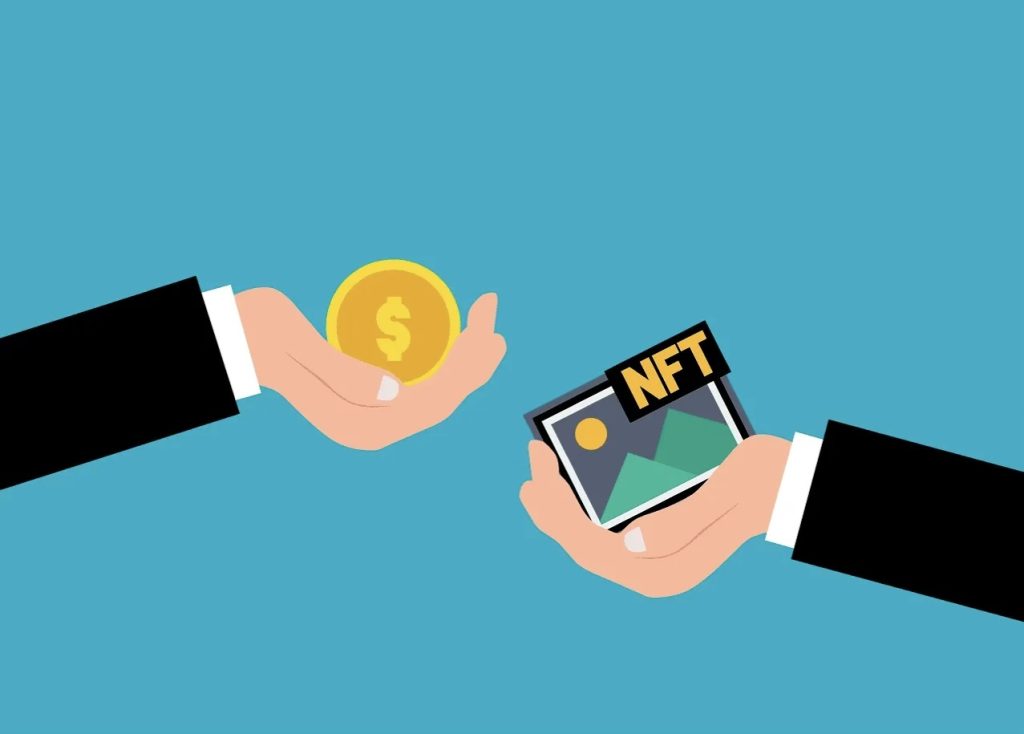
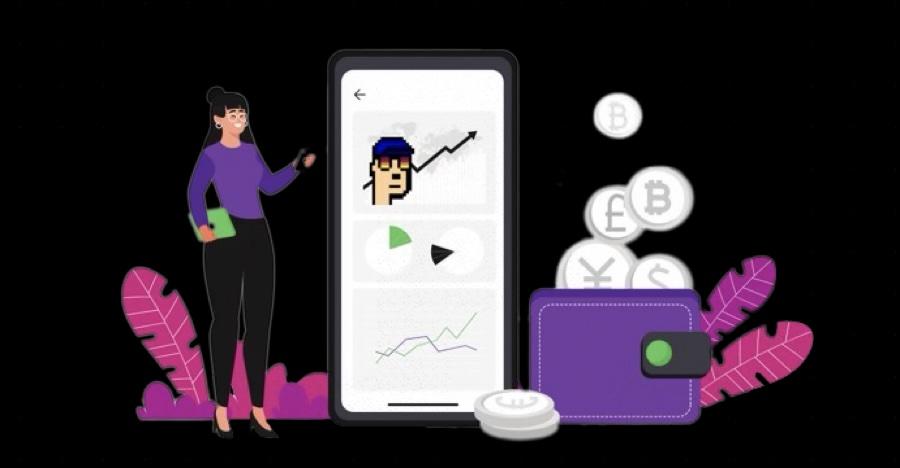
Wading into the NFT world isn’t as simple as buying a painting or downloading a song. NFTs operate in the blockchain ecosystem, meaning you’ll need some basic digital infrastructure — a crypto wallet, cryptocurrency, and access to a marketplace.

Step 1 – Get a Crypto Wallet

A crypto wallet stores your digital assets and allows you to transfer, trade, and sign blockchain transactions.

There are two main types:

Tip: Use a hot wallet for day-to-day trading and a cold wallet for safekeeping your prized NFTs.

Step 2 – Buy Cryptocurrency

To participate in most NFT markets, you’ll need cryptocurrency — typically Ether (ETH), the native token of the Ethereum blockchain. You can purchase ETH on exchanges like Coinbase, Binance, or Kraken using a credit card or bank transfer.

While Ethereum remains the most popular network for NFTs, other blockchains like Solana (SOL), Tezos (XTZ), and Flow (FLOW) also support NFT ecosystems with lower transaction fees and smaller carbon footprints. If you’re new, though, Ethereum is the easiest and most widely supported place to start.

Step 3 – Choose an NFT Collection

Not all NFTs are alike. Some, like Cozy Panda Club, Web3 Unicorn Club and Last Man Standing, focus on unique artistic expression, community engagement, and collectible value. When choosing which NFTs to mint or trade, consider:

Step 4A – Mint an NFT

Minting is the process of turning a digital file into a blockchain asset. You upload your artwork or media, add metadata (title, description, royalties), and fund the minting with crypto.

Be cautious — minting copyrighted content you don’t own has legal implications. Always ensure you hold the rights to what you’re tokenizing.

Once minted, the NFT appears in your wallet. You can hold it, list it for sale, or even fractionalize it to allow shared ownership among investors.

Step 4B – Buy or Sell NFTs

When buying NFTs, you can either purchase them outright or bid in auctions. Once the transaction is confirmed, the NFT transfers to your wallet, and ownership is immutably recorded on the blockchain.

Selling works similarly: list your NFT, set a price, and choose the auction format. When a buyer completes the purchase, your wallet automatically receives the proceeds.

The Environmental Impact of NFTs

One of the most common criticisms leveled against NFTs concerns their environmental footprint. Early on, most NFTs were minted on proof-of-work (PoW) blockchains like Ethereum, which required vast energy to validate transactions.

However, this landscape has changed dramatically. With Ethereum’s 2022 “Merge” upgrade, the network transitioned to proof-of-stake (PoS) — cutting its energy use by over 99.5%. Today, NFT minting is more sustainable than ever.

Alternative blockchains like Tezos and Solana also employ eco-friendly mechanisms (Liquid Proof-of-Stake and Proof-of-History, respectively), consuming a fraction of the energy of older systems.

While no digital technology is entirely carbon-neutral, the NFT ecosystem continues to innovate toward sustainability — proving that environmental responsibility and technological progress can coexist.

Why People Invest in NFTs

The motivations behind owning NFTs vary — from artistic passion to financial speculation. However, several key drivers have made NFTs a global phenomenon:

  1. Empowering Creators – NFTs revolutionize how artists and musicians monetize their work. Traditionally, creators rely on intermediaries — galleries, agents, record labels — that take large cuts of profits. NFTs remove these middlemen, allowing direct relationships between creators and their audience.
  2. Digital Collectibility – NFTs appeal to our age-old desire to collect rare and beautiful things. Just as baseball cards, stamps, or art with intrinsic collectible value, NFTs bring that experience to the digital world — complete with transparent ownership records.
  3. Investment Diversification – As digital assets gain legitimacy, investors see NFTs as part of a broader alternative investment portfolio — alongside real estate, commodities, or venture assets. Some high-profile NFTs have appreciated dramatically in value.
  4. Community and Access – NFTs often double as membership passes or access tokens. Holding certain NFTs can grant entry to exclusive events, communities, or private clubs, making ownership both social and financial.
  5. Proof of Identity and Authenticity – NFTs can also function as digital passports, verifying ownership or participation. In the future, NFT-based identity systems could power everything from academic credentials to luxury goods authentication.

Risks and Challenges

While NFTs promise innovation, they come with caveats:

As the market matures, regulation and better infrastructure will mitigate many of these risks.

NFTs and Real-World Asset Tokenization

The most exciting evolution in NFTs is their expansion beyond digital art. NFTs are increasingly being used to represent real-world assets — from luxury watches to real estate.

Tokenizing tangible assets allows fractional ownership and easier transferability, unlocking liquidity in traditionally illiquid markets. Imagine owning 1% of a luxury villa or a rare artwork — represented by a blockchain token.

This trend positions NFTs not just as collectibles but as financial instruments — bringing together DeFi (Decentralized Finance) and traditional investment under one umbrella.

NFT Usage and Ownership Rights

NFTs are often misunderstood when it comes to intellectual property (IP) rights. Owning an NFT doesn’t necessarily mean owning the copyright of the associated artwork.

Think of it this way: owning a vintage baseball card doesn’t give you rights to reproduce the player’s image commercially — it merely certifies that you own that particular card.

Similarly, buying an NFT grants you ownership of the token — not automatic rights to the underlying IP, unless explicitly stated in the sale terms. For instance, Bored Ape Yacht Club (BAYC) NFTs famously grant full commercial rights to their owners, allowing them to create merchandise or even brands around their apes. However, most NFTs do not.

Always read the licensing terms before minting or buying. Some creators release their work under Creative Commons (CC0) licenses, making them free for public use, while others maintain full copyright control.

NFT Scams Explained

The NFT boom, like any financial frontier, has attracted scammers. Common scams include:

How to stay safe:

NFTs as an Emerging Asset Class

As blockchain technology matures, NFTs are emerging as credible, data-verified instruments of value. This evolution is increasingly drawing attention from institutional investors, hedge funds, and family offices, who are exploring NFTs as part of diversified digital portfolios and even blockchain-based securitization strategies.

Key Investment Attributes of NFTs

  1. Scarcity and Provenance: Each NFT is unique and immutably traceable on the blockchain. Provenance — the verifiable record of ownership — eliminates the risk of forgery and enhances authenticity. For collectors, investors, and institutions, this transparency ensures confidence in the asset’s legitimacy and long-term value.
  2. Liquidity and Accessibility through Tokenization: Traditional assets like fine art or real estate often face liquidity barriers, with transactions taking weeks or months. NFTs, by contrast, can be traded globally within seconds, enabling instant liquidity and broader access. Tokenization also allows fractional ownership, meaning investors can hold shares of high-value assets, democratizing participation in previously exclusive markets.
  3. Yield Generation and Passive Income Potential: Beyond appreciation, NFTs can generate recurring income through royalties, staking, or DeFi integrations. Artists, creators, and investors can earn automatic royalties every time their NFT is resold — a feature that redefines the concept of residual income in the digital economy.
  4. Cultural and Social Capital: NFTs are not merely financial assets; they also embody cultural significance, identity, and community value. From digital fashion and gaming to music and brand collaborations, NFTs often serve as social badges and status symbols, merging lifestyle with investment potential.
From Collectibles to Institutional Portfolios

The initial NFT boom centered around digital art and collectibles — icons like Beeple’s “Everydays” and the Bored Ape Yacht Club made headlines for record-breaking sales. However, the next phase of NFT evolution lies in institutional integration.

Financial institutions and asset managers are beginning to treat NFTs as part of alternative investment portfolios, diversifying exposure across tokenized real estate, luxury assets, and digital cultural goods. Blockchain infrastructure now allows NFTs to be securitized, collateralized, or insured, adding layers of stability and regulatory maturity.

The Future of NFTs

The NFT ecosystem is still young, but its potential is immense. Here are a few trends shaping its future:

  1. Real-World Integration: NFTs will increasingly represent real-world assets — luxury items, event tickets, real estate, or even company shares. Tokenized ownership will enable global, frictionless trade.
  2. AI and Dynamic NFTs: AI-generated and evolving NFTs will introduce interactive digital art that changes over time or responds to user input — creating living, breathing digital assets.
  3. Interoperability: Future NFTs will function seamlessly across blockchains, platforms, and metaverses — ensuring that assets minted in one ecosystem can thrive in another.
  4. Regulatory Maturity: Governments are drafting clearer frameworks for NFT taxation, consumer protection, and anti-fraud compliance — providing confidence for institutional participation.
  5. Institutional Adoption: Museums, auction houses, and investment funds are entering the NFT world — ensuring its long-term legitimacy.

Collections Like Cozy Panda Club, Web3 Unicorn Club andLast Man Standing Leading the Way: These collections showcase how verified, authentic, and artistically meaningful NFTs can thrive, providing models for innovation, community, and sustainable value creation.

Conclusion

NFTs are more than a passing trend — they are the building blocks of a new digital economy, where ownership, creativity, and value converge on transparent, decentralized networks.

They represent empowerment for creators, diversification for investors, and access for collectors. They merge art and finance, culture and code — and in doing so, redefine what it means to own something in the 21st century.

Collections like Cozy Panda Club, Web3 Unicorn Club and Last Man Standing are ensuring that this evolution remains grounded in authenticity, community, and artistic integrity — shaping a future where NFTs are not just speculative assets, but enduring cultural and financial instruments.

The rise of NFTs as alternative asset classes marks a historic moment in how humanity perceives value — shifting ownership from the physical to the digital, and unlocking a world of new possibilities.

We use cookies to personalise content and ads, to provide social media features and to analyse our traffic. We also share information about your use of our site with our social media, advertising and analytics partners. View more
Cookies settings
Accept
Privacy & Cookie policy
Privacy & Cookies policy
Cookie name Active
/*! elementor - v3.18.0 - 20-12-2023 */ .elementor-heading-title{padding:0;margin:0;line-height:1}.elementor-widget-heading .elementor-heading-title[class*=elementor-size-]>a{color:inherit;font-size:inherit;line-height:inherit}.elementor-widget-heading .elementor-heading-title.elementor-size-small{font-size:15px}.elementor-widget-heading .elementor-heading-title.elementor-size-medium{font-size:19px}.elementor-widget-heading .elementor-heading-title.elementor-size-large{font-size:29px}.elementor-widget-heading .elementor-heading-title.elementor-size-xl{font-size:39px}.elementor-widget-heading .elementor-heading-title.elementor-size-xxl{font-size:59px}

Privacy policy

/*! elementor - v3.18.0 - 20-12-2023 */ .elementor-widget-image{text-align:center}.elementor-widget-image a{display:inline-block}.elementor-widget-image a img[src$=".svg"]{width:48px}.elementor-widget-image img{vertical-align:middle;display:inline-block} This agreement was written in English. To the extent any translated version of this agreement conflicts with the English version, the English version controls.Date of Last Revision: May 1, 2020

Introduction:

The mission of PAIBLOCK is provide users with a mobile wallet, and services providers, governments and card issuers a means to service it. We adhere to the following principles to protect your privacy: We do not rent, sell, or otherwise provide your personally identifiable information to third parties without your consent, except as described in this policy or as required by law. We do not share any information you have not chosen to display on your PAIBLOCK profile to other parties, unless compelled by law, or as necessary to enforce our User Agreement or protect the rights, property, or personal safety of PAIBLOCK, its Users, and the public. All information that you provide will be protected with industry standard protocols and technology. We reserve the right to modify this Privacy Policy at any time, so please review it frequently. If we make material changes to this policy, we will notify you here, by means of a notice on our home page so that you may access and review the changes to this document in advance of your continued use of the service. If you object to any changes, you may close your account.

1. Information Collected

PAIBLOCK makes features and functionality available through our website, including our mobile applications, basic and premium services, and other information provided as part of the PAIBLOCK services (“Services”). If you have any hesitation about providing information to us and/or having your information displayed on the PAIBLOCK website or otherwise used in any manner permitted in this Privacy Policy and the User Agreement, you should not become a member of the PAIBLOCK; and, if you are already a member, you should close your account. We collect your personal information in the following ways:

A Registration

In order to become a User, you must provide us the following information to create an account: name, email address, country, and password. Without this minimal amount of information, you cannot create a PAIBLOCK account. Like other passwords, you should choose one that is known only by you. PAIBLOCK requests other information from you during the registration process, (e.g., gender, location, etc.) that PAIBLOCK uses to provide better, more customised services such as language-specific profile pages and updates.

B. Profile Information

Once you become a User, you may provide additional information to your PAIBLOCK Profile. Providing additional information about yourself beyond what is minimally required at registration is entirely up to you,

C. Financial account

For In-app banking users we collect the following types of identifiers, commercial information, and other personal information from your financial product and service providers: . Account information, including financial institution name, account name, account type, account ownership, branch number, IBAN, BIC, and account and routing number; . Information about an account balance, including current and available balance; . Information about credit accounts, including due dates, balances owed, payment amounts and dates, transaction history, credit limit, repayment status, and interest rate; . Information about loan accounts, including due dates, repayment status, balances, payment amounts and dates, interest rate, guarantor, loan type, payment plan, and terms; . Information about investment accounts, including transaction information, type of asset, identifying details about the asset, quantity, price, fees, and cost basis; . Identifiers and information about the account owner(s), including name, email address, phone number, date of birth, and address information; . Information about account transactions, including amount, date, payee, type, quantity, price, location, involved securities, and a description of the transaction; and . Professional information, including information about your employer, in limited cases where you’ve connected your payroll accounts. The data collected from your financial accounts includes information from all your accounts (e.g., checking, savings, and credit card) accessible through a single set of account credentials.  

D. Personally identifiable information

Paiblock operates in compliance with anti-money laundering and know your customer rules and regulations. In order to access certain type of services, we collect the following information: full name, telephone, mail address, residential address copy, date of birth, Nationality, copy of government ID, personal photograph (with ID in Hand), description of Source of Funds (tax return, salary slips).

E. Contacts Information

In order to connect with others on PAIBLOCK, you may use the Services to send invitations either to their PAIBLOCK profiles or email addresses of people you know if they have not registered with PAIBLOCK. The names and email addresses of people whom you invite will be used to send your invitations and reminders. Please note that when you send an invitation to connect to another User, that User will have access to your email address because it is displayed in the invitation.

F. Customer Service

We collect information when you interact with PAIBLOCK’s customer service website in order to accurately categorize and respond to customer inquiries and investigate breaches of our terms.

G. Using the PAIBLOCK Site and Applications

We receive information when you interact with and use the PAIBLOCK website, PAIBLOCK Applications (e.g. PAIBLOCK for iPhone, Android, etc.), and PAIBLOCK platform technology (such as “Puut API”).

H. Cookies

We use cookies and web log files to track site usage and trends, to improve the quality of our service, to customise your experience on PAIBLOCK, as well as to deliver PAIBLOCK and third-party advertising to Users both on and off the PAIBLOCK site. A cookie is a tiny data file that resides on your computer, mobile phone, or other device, and allows us to recognize you as a User when you return to the PAIBLOCK website using the same computer and web browser. You can remove or block cookies using the settings in your browser, but in some cases doing so may impact your ability to use PAIBLOCK. One type of cookie, known as a “persistent” cookie, is set once you’ve logged in to your PAIBLOCK account. The next time you visit the PAIBLOCK website, the persistent cookie will allow us to recognize you as an existing User so you will not need to log in before using the Services. Another type of cookie, called a “session” cookie, is used to identify a particular visit to the PAIBLOCK website. Session cookies expire after a short time or when you close your web browser.

I. Log files,

Due to the communications standards on the internet, when you visit the PAIBLOCK website we automatically receive the URL of the site from which you came and the site to which you are going when you leave PAIBLOCK. PAIBLOCK also receives the internet protocol (“IP”) address of your computer (or the proxy server you use to access the World Wide Web), your computer operating system and type of web browser you are using, email patterns, your mobile device (including your UDID) and mobile operating system (if you are accessing PAIBLOCK using a mobile device), as well as the name of your ISP or your mobile carrier. PAIBLOCK may also receive location data passed to it from third-party services or GPS-enabled devices that you have enabled.

J. Rights to Access

You have a right to access, modify, correct and eliminate the data you supplied to PAIBLOCK. If you update any of your information, we may keep a copy of the information that you originally provided to us in our archives for uses documented in this policy. You may request deletion of your information at any time by contacting PAIBLOCK customer service. We will respond to your request within 30 days. Please note, however that information you have shared with others, or that other Users have copied, may also remain visible even if you request its deletion.

K. Data Retention

PAIBLOCK will retain your information for so long as your account is active or as needed to provide you services. We will retain and use your information as necessary to comply with our legal obligations, resolve disputes, and enforce this Agreement.

2. Uses of personal information

A. Consent

The information you provide to PAIBLOCK may reveal, or allow others to identify, your nationality, ethnic origin, gender, age, and other aspects of your life. Supplying information to PAIBLOCK, including any information deemed “sensitive” by applicable law, is entirely voluntary on your part. You have the right to withdraw your consent to PAIBLOCK’s collection and processing of your information at any time, in accordance with the terms of this Privacy Policy and the User Agreement, by changing your preferences, or by closing your account, but please note that your withdrawal of consent will not be retroactive.

B. PAIBLOCK Communications

As described in the User Agreement, we will communicate with you through email, notices posted on the PAIBLOCK website, messages to your PAIBLOCK inbox, or through other means available through the service, including mobile text messages. We may send you a series of emails that help inform new Users about the features of the Services, and we will also send you service messages relating to the functioning of the Services. We may also send you messages with promotional information directly or on behalf of our partners, unless you have opted out of receiving promotional information. You can change your e-mail and contact preferences at any time by logging into your account. If you wish, you can also opt-out of receiving promotional emails by sending a request to PAIBLOCK customer service through our customer service site. Please be aware that you cannot opt-out of receiving service messages from PAIBLOCK. Also, if we send communications to you via the carrier service with which you have a mobile communications subscription or otherwise have access, you understand you will pay any service fees associated with your receipt of messages on your mobile device (including text messaging charges).

C. User Communications

Many communications you initiate through will list your primary email address and name in the header of the message. Your contact information will only be shared with another User if both of you have indicated that you would like to establish contact with each other.

D. Customised Content

We use information you provide to us (or to third parties with whom PAIBLOCK offers remote services) to customise your experience on our website.

E. Sharing Information

We do not sell, rent, or otherwise provide your personally identifiable information to third parties, except as described in this policy. We will also not share other personal information without your explicit consent or to carry out your instructions (for example, to process payment information) unless, disclosure is reasonably necessary in our opinion to: (1) comply with legal process, including, but not limited to, civil and criminal subpoenas, court orders or other compulsory disclosures; (2) enforce this Agreement; (3) respond to claims of a violation of the rights of third parties, whether or not the third party is a User, individual, or government agency; (4) respond to customer service inquiries; or (5) protect the rights, property, or personal safety of PAIBLOCK, our Users or the public. We may provide aggregated anonymous data about the usage of the Services to third parties for purposes that we deem, in our sole discretion, to be appropriate, including to prospective advertisers on PAIBLOCK.

F. Services providers

We collaborate with and allow third parties to use PAIBLOCK’s platform to offer services and functionality in conjunction with and outside of PAIBLOCK. These third parties are partners (“Puut Partners”) with whom we have negotiated an agreement to provide services (“Remote Services”). These partners have accepted our API terms and conditions and includes services providers governments and card issuers. Despite our agreements and technical steps taken to restrict access to and avoid possible misuse of information, we may not screen or audit all Remote Services. We also cannot guarantee that any PAIBLOCK Partner will abide by our agreement. You agree that your use of Remote Services is on an “as is” basis and without any warranty. If you use any Remote Service, the PAIBLOCK Partner may access and share certain information about you, such as non-public profile. This includes information about your wallet number.

G. Polls and Surveys

Polls and Surveys may be conducted by PAIBLOCK, PAIBLOCK Users or third parties. As a User, you may be invited to participate in polls and surveys from the PAIBLOCK website. Your selection may be random, or it may be based on your non-personally identifiable information, such as job title, geography, company size and/or industry. Whether or not you decide to participate in a poll or survey is completely up to you. After you complete a poll, you will be given access to the aggregate responses of the poll on a results page. Some third parties may target advertisements to you on the results page based on your answers in the poll We may use third parties to deliver incentives to you to participate in surveys or polls. If the delivery of incentives requires your contact information, you may be asked to provide personally identifiable information to the third party fulfilling the incentive offer, which will only be used for the purpose of delivering incentives and/or verifying your contact information. It is up to you whether you provide this information, or whether you desire to take advantage of an incentive. We will not disclose any personally identifiable information to any third parties in connection with the conduct of any polls or surveys. Your consent to use any personally identifiable information for the purposes set forth in the poll or survey will be explicitly requested by the party conducting it.

H. Search

We offer search services solely for finding a user you are likely to know and to send a friendship request.

I. Compliance

It is possible that we may need to disclose personal information, profile information and/or information about your activities as a PAIBLOCK User when required by subpoena or other legal process, or if PAIBLOCK has a good faith belief that disclosure is necessary to (a) investigate, prevent or take action regarding suspected or actual illegal activities or to assist government enforcement agencies; (b) to enforce the User Agreement, to investigate and defend ourselves against any third party claims or allegations, or to protect the security or integrity of our site; and/or (c) to exercise or protect the rights, property or personal safety of PAIBLOCK, our Users, employees, or others.

J. Disclosures to Others as the Result of a Change in Control or Paiblock A/S

We may also disclose your personal information and other information you provide to another third party as part of a sale of the assets of Paiblock A/S, a subsidiary or division, or as the result of a change in control of the company. Any third party to which PAIBLOCK transfers or sells PAIBLOCK’s assets will have the right to continue to use the personal and other information that you provide to us.

3. Your Information Choices

A. Accessing Your Account

You can review the personal information you provided to us and make any desired changes to the information you publish, or to the settings for your PAIBLOCK account including your email and contact preferences, at any time by logging in to your account on the PAIBLOCK website. Please be aware that even after your request for a change is processed, PAIBLOCK may, for a time, retain residual information about you in its backup and/or archival copies of its database.

B. Closing Your Account

You can close your account through the PAIBLOCK customer service site. If you close your PAIBLOCK account, we will remove your name and other personally identifiable information from our publicly viewable database. If you close your account, we have no obligation to retain your information, and may delete any or all of your account information without liability. However, we may retain certain data contributed by you if PAIBLOCK believes it may be necessary to prevent fraud or future abuse, or for legitimate business purposes, such as analysis of aggregated, non-personally identifiable data, account recovery, or if required by law. PAIBLOCK may also retain and use your information if necessary to provide the Services to other Users. Similarly, other information you have shared with others, or that other Users have copied, may also remain visible. PAIBLOCK disclaims any liability in relation to the deletion or retention (subject to the terms herein) of information or any obligation not to delete the information. PAIBLOCK does not control when search engines update their cache, which may contain certain public profile information that has since been removed from PAIBLOCK’s publicly viewable database.

C. Memorializing Accounts

If we learn that a User is deceased, we may memorialize the User’s account. In these cases we may restrict profile access, remove messaging functionality, and close an account if we receive a formal request from the User’s next of kin or other proper legal request to do so.

4. Your Obligations

As a User, you have certain obligations to other Users. Some of these obligations are imposed by applicable law and regulations, and others have become commonplace in user-friendly communities of like-minded members such as PAIBLOCK: You must, at all times, abide by the terms and conditions of the then-current Privacy Policy and User Agreement. This includes respecting all intellectual property rights that may belong to third parties (such as trademarks or photographs). You must not download or otherwise disseminate any information that may be deemed to be injurious, violent, offensive, racist or xenophobic, or which may otherwise violate the purpose and spirit of PAIBLOCK and its community of Users. You must not provide to PAIBLOCK and/or other Users information that you believe might be injurious or detrimental to your person or to your professional or social status. You must keep your username and password confidential and not share it with others. Any violation of these guidelines may lead to the restriction, suspension or termination of your account at the sole discretion of PAIBLOCK.

5. Security

In order to help secure your personal information, access to your data on PAIBLOCK is password-protected, and sensitive data (such as credit card information) is protected by SSL encryption when it is exchanged between your web browser and the PAIBLOCK website. To protect any data you store on our servers, PAIBLOCK also regularly audits its system for possible vulnerabilities and attacks, and we use a tier-one secured-access data center. However, since the internet is not a 100% secure environment, we cannot ensure or warrant the security of any information you transmit to PAIBLOCK. There is no guarantee that information may not be accessed, disclosed, altered, or destroyed by breach of any of our physical, technical, or managerial safeguards. It is your responsibility to protect the security of your login information. Please note that emails, instant messaging, and similar means of communication with other Users of PAIBLOCK are not encrypted, and we strongly advise you not to communicate any confidential information through these means.

6. How to contact us

If you have questions or comments about this Privacy Policy, please contact us at: Paiblock A/S Attn: Legal Department, Privacy Policy Issues Engager 2-4 DK-2605 Broenby Denmark
Save settings
Cookies settings