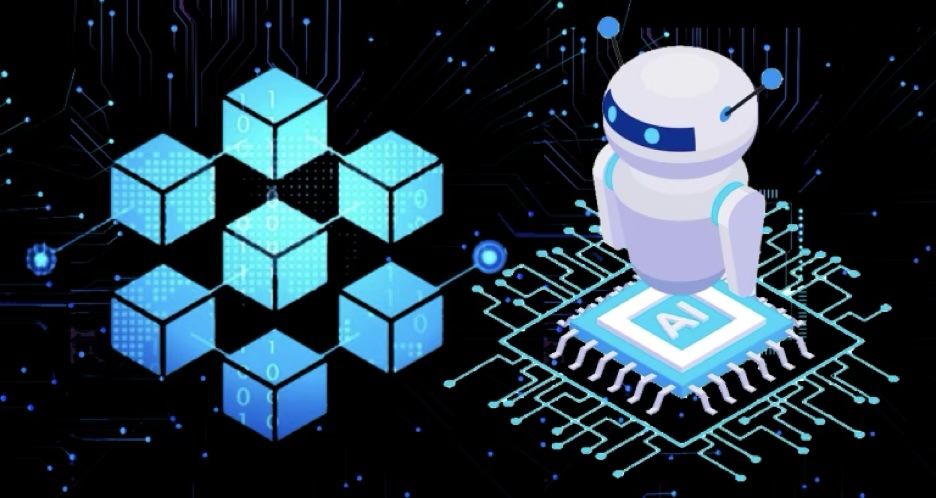
In the rapidly evolving landscape of digital technology, two of the most powerful and transformative forces are Artificial Intelligence (AI) and Blockchain. Each of these technologies has already left a profound mark on industries such as finance, healthcare, supply chain management, and governance, fundamentally altering the way organizations operate and make decisions.
AI has revolutionized data-driven insights, enabling machines to analyze vast amounts of information, recognize patterns, and make predictions that were previously unimaginable. Blockchain, on the other hand, has introduced a new era of trust, transparency, and security, providing decentralized and immutable records that ensure data integrity and accountability.
Individually, AI and blockchain have created waves of innovation, but their combined potential is even more compelling. Together, they promise to redefine how we think about intelligence, decision-making, and automation, while simultaneously addressing critical challenges related to data security, privacy, and trust.
This convergence has the power to reshape business models, streamline operations, and drive more ethical, transparent systems across sectors. From optimizing supply chains to enhancing healthcare delivery, facilitating secure financial transactions, and enabling decentralized governance, the integration of AI and blockchain represents not just a technological advancement, but a paradigm shift in how we interact with, and rely on, digital systems.
As these technologies continue to evolve, their synergy could unlock new opportunities for innovation, efficiency, and societal benefit, paving the way for a future where intelligent, secure, and ethical systems are at the core of human progress.
Why AI and Blockchain Are a Powerful Pair
Artificial Intelligence: The Power of Prediction
AI has made tremendous strides in enabling machines to learn, adapt, and predict. Whether it’s analyzing customer behavior, detecting fraud, or interpreting medical images, AI thrives on large datasets and complex models.
But this power comes with a caveat: the quality, provenance, and integrity of data matter. Poor or manipulated data can lead to biased or erroneous decisions.
Blockchain: The Foundation of Trust
Blockchain, at its core, is a decentralized, immutable ledger. Each transaction is recorded in a way that is tamper-evident, traceable, and verifiable by all participants. This makes blockchains ideal for systems where trust, auditability, and security are non-negotiable.
When AI and blockchain are combined, you get something greater than the sum of its parts: AI powered by trustworthy data, and blockchain enhanced by intelligent automation. This intersection offers unprecedented opportunities.
How AI and Blockchain Together Benefit Humanity
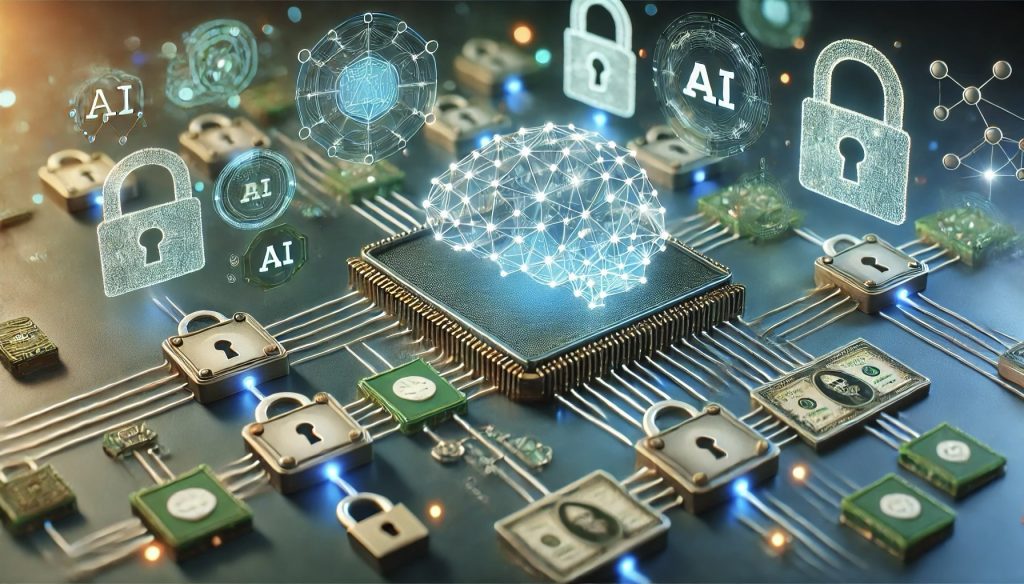
The true promise of integrating blockchain with AI isn’t just technological — it’s deeply human. When deployed thoughtfully, this convergence can address some of the biggest societal and ethical challenges of our time.
Empowering Individuals with Data Sovereignty
One of the most significant challenges in the digital age is data ownership. AI systems often rely on personal or organizational data, and users may have little say over how that data is stored, shared, or used.
- Blockchain-enabled data control: By storing data on a blockchain, individuals can retain ownership, grant permissions selectively, and monitor how their data is used.
- Fair monetization: People can tokenize their datasets and offer them to AI models or researchers, receiving compensation in a transparent, auditable way. This model is supported in decentralized data marketplaces.
- Privacy-preserving insights: AI can analyze data locally (e.g., via federated learning), producing valuable insights without exposing raw personal data. Blockchain can record the contributions and updates in a secure, transparent manner.
This empowers individuals — not just large corporations — to benefit from AI, creating a more equitable data economy.
Revolutionizing Healthcare
Healthcare is a domain where the stakes are life and death. AI’s predictive capabilities — spotting patterns in medical data, diagnosing early, personalizing treatment — are well-known. But without data security, trust, and patient control, adoption can be fraught.
- Secure patient data: Blockchain ensures that medical records are stored immutably, securely, and with permission control.
- AI-driven care: AI uses that data (with privacy safeguards) to predict disease, suggest treatment, and optimize resource allocation.
- Transparency and auditability: All AI-based clinical decisions can be logged on blockchain, providing a clear trail for review, regulation, and improvements.
Together, these technologies can help build a more trustworthy, efficient, and patient-centric healthcare system, especially in regions where data fragmentation or privacy concerns limit AI adoption.
Driving Fairness, Transparency, and Governance
Society increasingly demands accountable algorithms—whether for finance, legal systems, or public policy. AI decisions can be opaque (“black boxes”), leading to concern over bias and misuse. Blockchain provides a remedy.
- Immutable audit trails: Every AI decision or data transformation can be stored on-chain, making it traceable and auditable.
- Decentralized governance: By combining blockchain voting mechanisms with AI model updates, communities can democratically decide how models evolve.
- Regulatory compliance: AI systems can be designed to enforce compliance automatically, while blockchain provides regulators with real-time, tamper-proof access to records.
This convergence supports ethical AI that’s transparent, fair, and accountable, which is critical as AI becomes more deeply embedded in society.
Promoting Sustainable and Ethical Innovation
Sustainability is no longer optional, and the AI + blockchain duo can contribute meaningfully.
- Supply chain transparency: Blockchain ensures traceability from source to destination; AI analyzes data to optimize logistics, reduce waste, and predict demand.
- Decentralized energy systems: AI can manage energy usage efficiently, while blockchain tracks production and distribution (including carbon credits).
- Ethical sourcing: In manufacturing and agriculture, AI can detect inefficiencies or risk, while blockchain guarantees provenance and fair labor practices.
The result is a more sustainable, responsible innovation ecosystem — one that aligns with long-term global goals like environmental protection and social justice.
Democratizing Access to AI Services
Not everyone has the infrastructure or data to benefit from AI. Here, blockchain plays a democratizing role.
- Decentralized AI marketplaces: Blockchain platforms allow individuals and organizations to buy, sell, and share AI models and datasets in a peer-to-peer manner. Tokenized economies for compute power: Users with spare computing capacity (e.g., idle GPUs) can contribute to decentralized AI training or inference, earning tokens in return.
- Open collaboration: With transparent governance and contribution mechanisms, communities can co-create AI models for public good — rather than leaving development solely to large corporations.
This model leverages collective intelligence, reduces barriers, and ensures AI innovation serves a wider set of stakeholders.
Key Benefits of Combining AI and Blockchain

Beyond the societal benefits, the technical synergy between AI and blockchain unlocks concrete advantages for businesses, developers, and platforms like PaiBlock.
Enhanced Data Integrity & Trust
AI only works as well as the data it learns from. Blockchain ensures that data is valid, consistent, and untampered:
- Every data input can be timestamped and verified.
- AI models trained on blockchain-verified data produce more reliable and robust predictions.
- End users and regulators have visibility into what data was used to train models, increasing trust and accountability.
Decentralized Intelligence & Governance
Instead of AI being controlled by a few large entities, blockchain enables distributed AI networks:
- Models can be collaboratively trained using federated learning, with updates recorded on-chain.
- Decentralized governance frameworks allow stakeholders to vote on model improvements, ensuring community alignment.
- AI oracles (agents that feed real-world data into blockchains) can be secured and verified, bridging on-chain and off-chain worlds.
Smarter, Adaptive Smart Contracts
Smart contracts are self-executing code on the blockchain, but they can be rigid. AI supercharges them:
- Dynamic contracts: AI monitors data inputs and triggers changes in contract behavior (e.g., automatic renegotiation, conditional logic).
- Autonomous agents: AI agents can interpret smart contracts, negotiate terms, and autonomously interact with other agents or contracts.
- Risk mitigation: AI analyzes transaction history and user behavior to predict fraud or failure, enabling proactive contract safeguards.
Improved Security & Fraud Detection
Security is a major concern in blockchain systems, especially with decentralized finance (DeFi). AI helps secure these systems:
- Machine learning models can monitor for abnormal activity and flag suspicious transactions.
- Blockchain provides the immutable audit trail needed to verify whether alerts were genuine or false positives.
- Together, they build a proactive, self-defending network.
New Business Models & Economic Incentives
The union of AI and blockchain gives rise to entirely new business structures:
- Tokenized data economies: Data owners can monetize their datasets fairly, while AI developers pay for what they use.
- Decentralized AI-as-a-Service (AIaaS): Instead of centralized AI platforms, service providers can offer AI services in a peer-to-peer model on blockchain-based marketplaces.
- Collaborative intelligence networks: Entities can pool their resources—data, compute power, models—for mutual benefit, and smart contracts can fairly distribute rewards.
Real-World Use Cases: Where Blockchain + AI Are Already Making a Difference
Examining concrete examples helps make the abstract concrete. Here are real-world and emerging scenarios where AI and blockchain are already working hand in hand:
Healthcare & Bioinformatics
- Patient Data Security: Blockchain ensures that patient records are tamper-proof and accessible only to authorized parties, while AI helps analyze this data for diagnosis and treatment.
- Drug Discovery and Research: In research environments, datasets can be tokenized and shared, allowing AI models to train on high-quality, verified data with blockchain-based consent mechanisms.
Supply Chain & Logistics
- Traceability: Blockchain tracks the journey of products — from raw materials to end consumers. AI forecasts demand, optimizes inventory, and flags anomalies (e.g., counterfeit risks) in real time.
- Autonomous Agents: AI agents on blockchain can execute tasks like verifying certifications, managing logistics contracts, or transferring assets, enabling highly efficient, self-regulating supply networks.
Decentralized AI Marketplaces
- Model & Data Exchange: Platforms allow users to upload AI models or datasets, and others can pay to access them via tokens. Trust and payment are managed through smart contracts.
- Compute Networks: Projects like IO Research leverage blockchain-powered networks that let users contribute idle GPU capacity to AI training or inference for token rewards.
Autonomous Web3 Agents
- AI agents can operate entirely on-chain, executing DeFi trades, staking, voting in DAOs, or managing NFTs, all without centralized control.
- Compliance agents: AI-driven smart contracts continuously monitor blockchain activity for regulatory compliance (AML/KYC), enabling real-time audits.
Ethical Governance & Decision Making
- Auditability of AI: When AI decisions are hashed and stored on blockchain, their logic becomes transparent, and stakeholders can review decision trails.
- Decentralized Governance: Models can be voted on and updated through token-weighted governance systems, distributing power and reducing centralized risk.
Challenges & Considerations
While the vision of combining AI and blockchain is powerful, it comes with significant technical, economic, and ethical challenges:
Scalability & Performance
- Running AI algorithms (especially large models) on or in conjunction with blockchains demands substantial computational resources.
- Blockchain networks may face latency and throughput constraints when dealing with high volumes of AI-related transactions.
Energy Efficiency
- Both AI training/inference and blockchain consensus mechanisms (e.g., proof-of-work) can be energy-intensive. Sustainable architectures are essential.
- Approaches like federated learning and optimized machine-learning protocols (e.g., opML) are being investigated to reduce resource footprints.
Privacy vs Transparency Trade-Off
- While blockchain’s transparency is valuable for trust, too much openness may conflict with data privacy.
Hybrid solutions (e.g., zero-knowledge proofs combined with optimistic execution) such as opp/ai offer a balance between verifiability and privacy.
Governance & Interoperability
- Different blockchain platforms may not be interoperable, complicating cross-network AI collaboration.
Governance models to manage AI updates, versioning, and decentralized decision-making must be robust, fair, and resistant to exploitation.
Regulation & Compliance
- Regulatory frameworks are still adapting to decentralized AI systems.
- Ensuring compliance with data protection laws (e.g., GDPR), financial regulation, and AI ethics standards requires careful design and oversight.
The Future of AI and Blockchain Together
Looking ahead, the integration of AI and blockchain is poised to accelerate and deepen. Here’s where things might go in the next 5–10 years:
Decentralized, Autonomous Economies
We may see fully decentralized economies where AI agents negotiate, transact, and optimize resources on blockchain networks — all without human intermediaries. Such systems could power autonomous marketplaces, energy grids, or even smart cities.
Trustworthy, Scalable On-Chain AI
With innovations like opML (Optimistic Machine Learning) and privacy-preserving frameworks, AI inference and training could be performed directly on-chain, making AI more accessible, transparent, and decentralized.
Ethical Infrastructure for AI Governance
Blockchain-based governance could become the standard for AI ecosystems: stakeholders vote on model updates, datasets, and ethical compliance. Audit trails of decisions would be open, and community values would be embedded.
Global and Inclusive AI Services
Decentralized AI marketplaces may democratize access to high-level AI services. Anyone could buy or contribute to AI models; individuals can earn by sharing data or compute power. This opens doors for innovation from underrepresented regions and lowers barriers to entry.
Smart Regulation & Compliance Automation
AI will help regulators monitor decentralized systems, while blockchain provides immutable logs. Together, they could enable real-time compliance, reducing fraud and enhancing transparency in finance, health, and public sectors.

Building a Human-Centered Digital Future Through AI and Blockchain
As AI becomes more powerful and blockchain becomes more widely adopted, the true value lies not simply in using both technologies side by side—but in weaving them into a shared digital foundation that prioritizes transparency, intelligence, and human benefit.
This intersection marks the beginning of a new era where systems are not only automated and data-driven, but fundamentally trustworthy, equitable, and aligned with societal values.
Creating Transparent and Accountable AI Systems
AI models are often criticized for being opaque “black boxes,” making decisions that are hard to verify or interpret. Blockchain introduces the missing layer of accountability.
- Every data source can be timestamped and verified on-chain.
- Model updates can be transparently recorded, ensuring no unauthorized modifications.
- AI decisions can be logged immutably, providing clarity for audits and regulatory reviews.
This combination ensures AI systems are not just powerful—but responsible and trustworthy.
Enabling User-Owned Data Ecosystems
Data fuels AI. But the people who generate that data rarely benefit from it.
Blockchain radically shifts this paradigm.
- Individuals can own and control their personal data.
- Access permissions can be cryptographically enforced.
- Users can monetize their data safely and ethically, contributing to AI models while protecting their privacy.
This turns data into a personal asset, not a corporate monopoly.
Powering Decentralized AI Networks
Today, AI is concentrated in a handful of large corporations. Blockchain allows intelligence to evolve in distributed, community-driven ecosystems.
- AI models can be trained collaboratively across decentralized networks.
- Model governance can be handled by stakeholders, not centralized authorities.
- Tokenized incentives ensure fair participation and contribution.
This creates a global, permissionless innovation pipeline, unlocking AI for communities, startups, and developing regions—not just big tech.
Building Autonomous Digital Economies
AI-powered smart contracts on blockchain will redefine how economic systems operate.
- Smart contracts can adapt based on AI predictions.
- Supply chains can operate with self-governing logistics.
- Financial markets can automate risk assessment and fraud detection in real time.
The result is a future where businesses are more efficient, transparent, and resilient, reducing costs and eliminating intermediaries.
Ensuring Ethical, Inclusive, and Sustainable AI
As AI becomes ubiquitous, concerns around fairness, sustainability, and societal impact grow. Blockchain offers tools to address these challenges directly.
- Ethical guidelines can be enforced through transparent governance.
- AI’s environmental footprint can be monitored and managed.
- Communities can vote on updates or dataset inclusion.
This ensures AI development remains aligned with human rights, environmental stewardship, and social equity.
Accelerating Innovation While Preserving Trust
Organizations often hesitate to adopt AI due to concerns about privacy, security, or bias. With blockchain:
- Data integrity is guaranteed.
- Sensitive information stays encrypted and private.
- Trust is built directly into the infrastructure.
This fosters an environment where innovation can accelerate without compromising user safety or regulatory compliance.
The intersection of AI and blockchain is not about replacing systems we have today—it’s about rebuilding them with intelligence, transparency, and trust at the core. This creates a digital future that is not only technologically advanced, but human-centered, fair, and sustainably governed.
Conclusion
The convergence of Artificial Intelligence and Blockchain is not just a technological trend—it is a profound shift in how we build, trust, and interact with digital systems. Together, they offer:
- Intelligence powered by trustworthy data,
- Decentralized ecosystems that respect user sovereignty,
- Transparent and auditable governance,
- Innovative business models, and
- Societal benefit at scale.
Platforms like PaiBlock are leading this transformation, proving that the integration of AI and blockchain can be more than speculative: it can be practical, profitable, and aligned with human values.
While challenges remain — from scalability and energy efficiency to governance and privacy — the technological, ethical, and economic incentives to overcome them are strong. As these technologies mature, the future they create promises to be not just smarter, but fairer, more inclusive, and more sustainable.
In the next decade, the AI + blockchain paradigm may well define how we live, work, and govern ourselves. By embracing this convergence responsibly — with platforms like Paiblock — we can ensure that technology truly serves humanity, driving progress without sacrificing trust or integrity.
FAQs
1. What is the synergy between AI and Blockchain?
AI provides intelligent decision-making and predictive insights, while blockchain ensures data security, transparency, and trust. Together, they create systems that are reliable, auditable, and human-centered.
2. How can AI and Blockchain benefit healthcare?
AI can predict disease, optimize treatments, and personalize care, while blockchain secures patient data, ensures transparency, and creates auditable clinical trails, making healthcare safer and more efficient.
3. What industries are most impacted by AI and Blockchain integration?
Industries like finance, healthcare, supply chain, logistics, and governance are seeing the most immediate benefits, with AI and blockchain enabling automation, transparency, and smarter decision-making.
4. How does Paiblock contribute to the AI + Blockchain ecosystem?
Paiblock provides a secure, verifiable data infrastructure, supports decentralized AI marketplaces, enables adaptive smart contracts, and promotes transparent, ethical AI governance.
5. What is the future of AI and Blockchain together?
The future includes decentralized economies, autonomous AI agents, scalable on-chain AI, ethical governance, inclusive access to AI services, and real-time regulatory compliance — all powered by blockchain-backed intelligence.